

Paradise Was Always a Garden: Henry Moore at Kew, and the Persian Tradition He Echoes
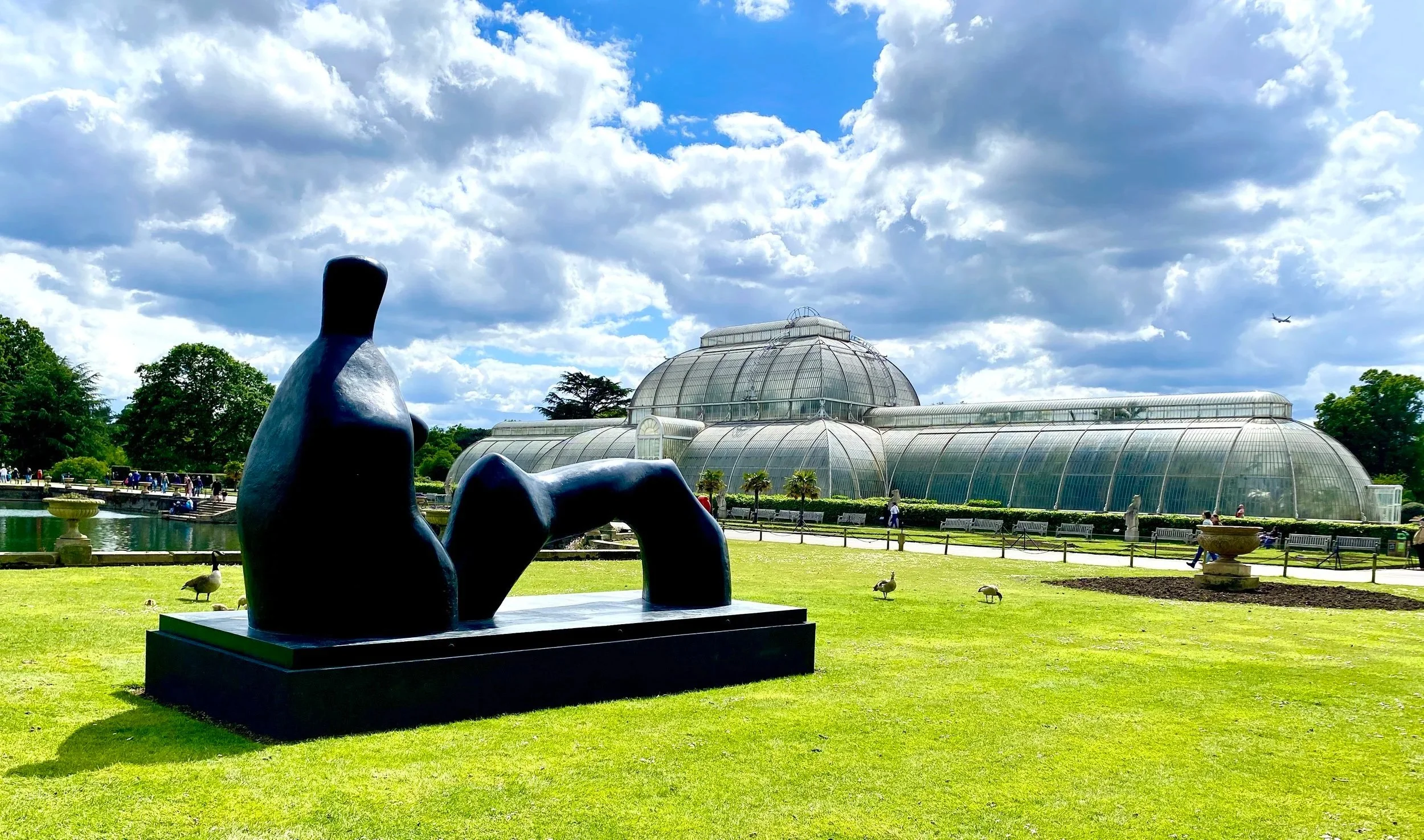
Henry Moore reclining figure at Kew Gardens, May 2026
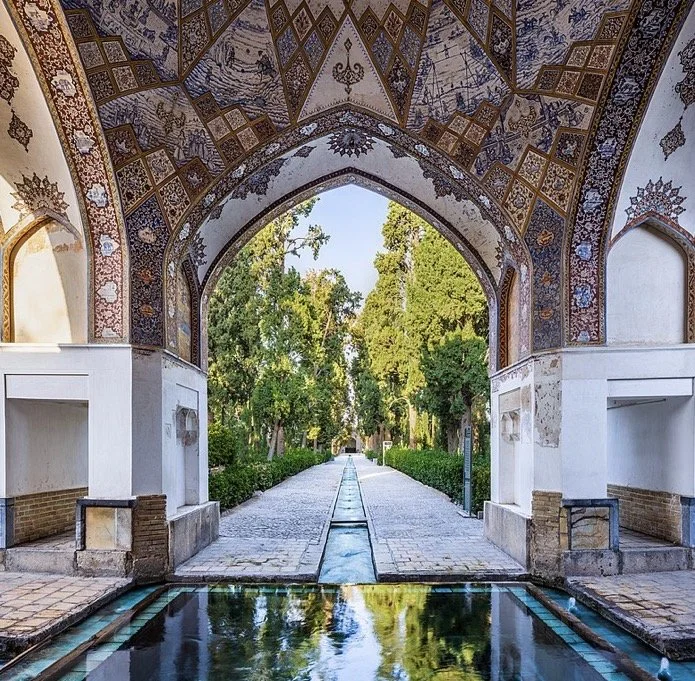
Bagh-e Fin (Fin Garden), Kashan
Standing in the grounds of Kew Gardens, watching Henry Moore's bronze sculptures rise out of the grass and mist, I felt something unexpected: a quiet familiarity. Not because I had seen these works before, but because the feeling they stirred in me was one I recognised from somewhere much older, and much closer to home.
It was the feeling of a Persian garden.
The word paradise is Iranian. It comes from the ancient Persian “pari-daiza”, a walled garden, an enclosed paradise on earth. Long before it entered the English language through religion and poetry, it was a design principle. A way of living. A belief that nature, when thoughtfully shaped by human hands, becomes something sacred.
The Persian garden, known as the “Chahar Bagh” or four-fold garden, is one of the oldest and most influential design traditions in the world. Divided into four sections by flowing water, centred on a fountain, framed by cypress and fruit trees, it was not merely decorative. It was philosophical. It said: nature and humanity are not separate. Beauty and function are not opposites. The garden is where heaven meets earth. This stands in quiet opposition to the architecture of the twenty-first century, where tiny flats and grand buildings have left little outdoor space and the line between home and nature has all but disappeared.
And yet this idea, that art belongs in nature and that the two are in conversation rather than competition, was also at the heart of Henry Moore's life's work.
Moore was famously insistent that his sculptures live outdoors. He believed a work of art placed in a landscape was almost always more powerful than the same work placed in a gallery. In his 1937 essay The Sculptor Speaks, he wrote: "Sculpture is an art of the open air. Daylight, sunlight, is necessary to it, and for me its best setting and complement is nature. I would rather have a piece of my sculpture put in a landscape, almost any landscape, than in, or on, the most beautiful building I know."
His reclining figures were not meant to be observed from a distance under artificial light; they were meant to be walked around, touched by sunlight and shadow, rained on, grown over by moss. He collected pebbles, bones, shells and driftwood from his walks, bringing them back to his studio to study the way nature carved and shaped material over time. The landscape was not his backdrop. It was his teacher.
He returned to this idea often. In the same essay he wrote: "I have always paid great attention to natural forms, such as bones, shells, and pebbles. Sometimes for several years running I have been to the same part of the seashore, but each year a new shape of pebble has caught my eye, which the year before, though it was there in hundreds, I never saw."
This is something any Iranian will recognise immediately.
For thousands of years, Persian craftsmen and architects did not place art against nature; they wove the two together. The gardens of Isfahan, Shiraz and Kashan were not ornaments attached to buildings. They were, in a sense, the building itself: the central courtyard, the fountain, the shaded iwan opening onto flowering trees, all of it designed so that the person living there was always, in some way, inside the landscape. The traditional Iranian home was built around nature, not despite it.
There is something quietly radical about Moore's insistence on this, because in the twentieth-century Western art world it was not obvious. The gallery, the white wall, the controlled environment, these were the assumed settings for serious art. Moore pushed back against all of that.
But in Iran, we never needed to push back. The integration of art, craft, nature and daily life was never lost; it was the foundation. A Persian carpet is, in its deepest sense, a portable garden, a paradise you can roll up and carry into any room. The same is true of the muqarnas of a mosque ceiling imitating stalactites, and the tilework of a hammam reflecting light like water. Persian craft has always understood that the natural world is not a resource to be depicted, but a language to be spoken.
When I stood at Sotheby's during London Craft Week, listening to the discussion around Moore's work, I kept thinking about Tehran. About the houses I grew up knowing, where every room opened onto a garden, where the sound of water was always present, where the boundary between inside and outside was deliberately, lovingly blurred.
Those houses feel very far away now. The Tehran of apartments and traffic, and of a country whose people have been kept at a distance from much of their own heritage, is not the Tehran of Persian gardens. But the gardens are still there. In Fin, in Eram, in the grounds of Niavaran. They have waited, as they always have, with extraordinary patience.
Henry Moore's sculptures at Kew felt like that kind of patience. Big, quiet, rooted. Not demanding attention, but offering presence. Belonging exactly where they were.
Maybe that is the deepest connection. Not a stylistic one, not a historical one, but a felt one. The belief that beauty should not be kept behind glass. That art is most itself when it is part of the world. That paradise, whether you find it in a Yorkshire landscape or a garden in Isfahan, is not somewhere else.
It is here. If you know how to look.
Henry Moore at Kew runs until 31 January. If you are in London, go, and let the gardens hold the sculptures, as they were always meant to.